
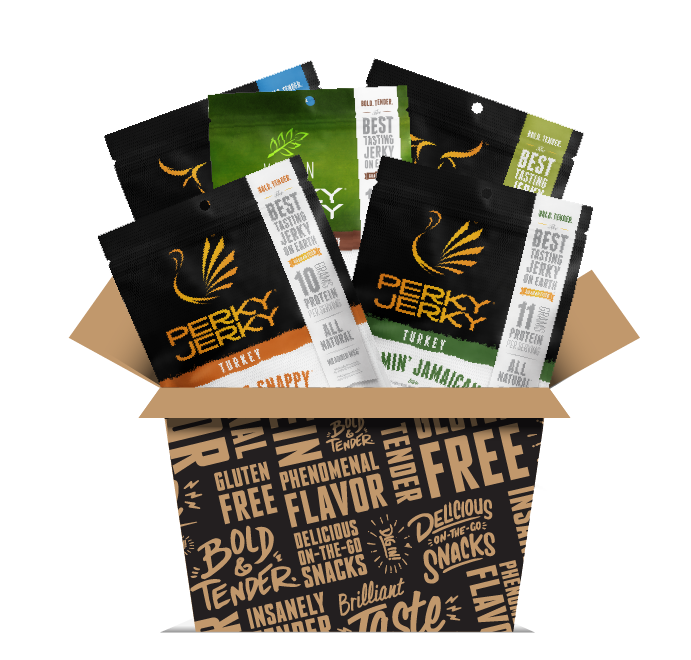

Come November, turkey breast owns the holiday table. But what about the other 364 days, when you want that savory turkey flavor and a protein boost without roasting a whole bird?
That's where turkey jerky comes in. Here's how they stack up on nutrition, ingredients, storage, and everyday convenience.
Turkey jerky and turkey breast might come from the same thing, but they're surprisingly different. Both can fit into a balanced diet, but their protein content, sodium levels, shelf life, and portability make each better suited to different situations.
What Is Turkey Jerky?
This jerky is often turkey breast, that's been seasoned and made to perfection. That drying process creates the bold and tender texture Perky Jerky is known for and concentrates every bit of flavor. Marinades, spices, and sweeteners let each brand put its own spin on it, from peppery and savory to sweet and spicy.
Commercially produced, shelf-stable turkey jerky can be stored unopened without refrigeration, as long as you follow the instructions on the package.
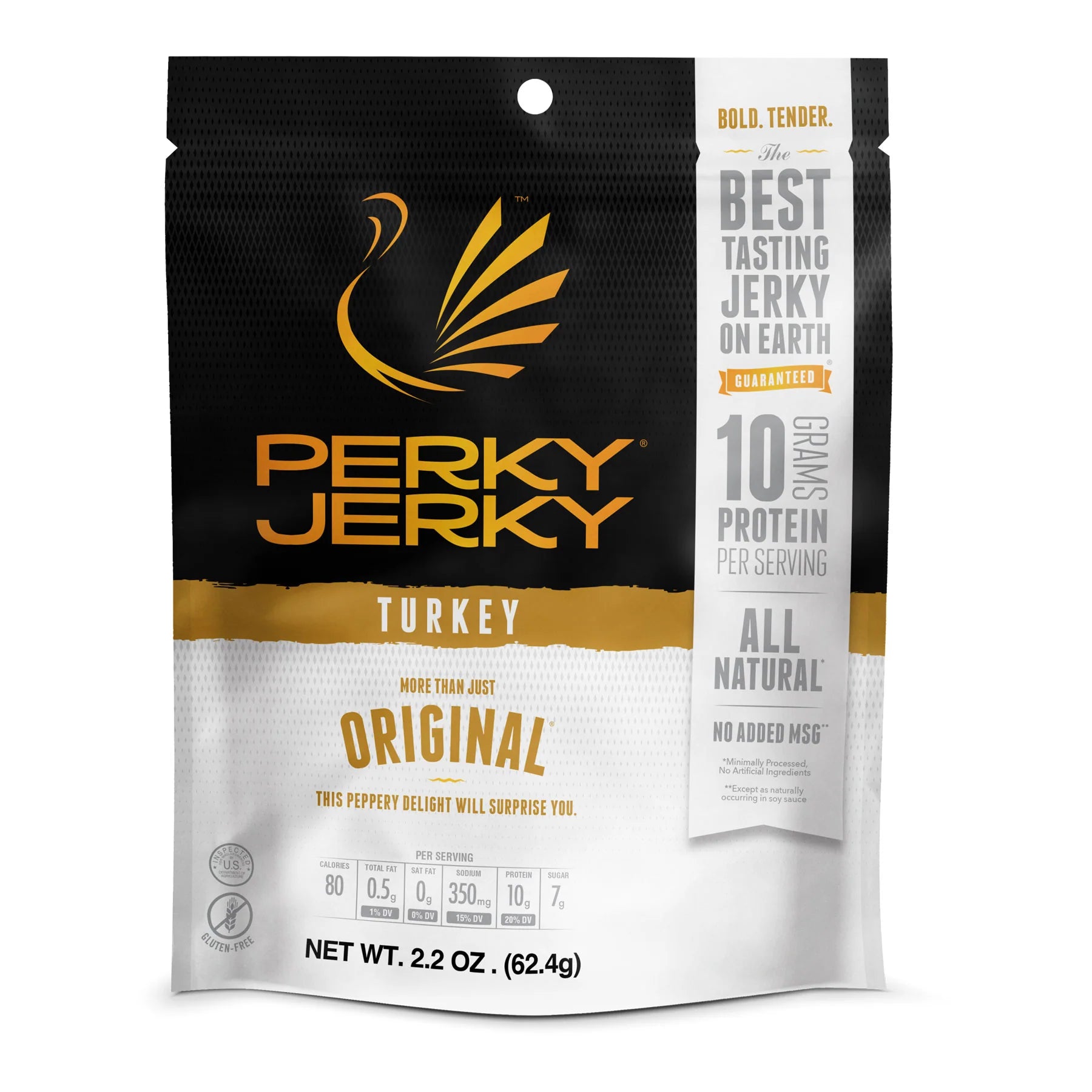
At Perky Jerky, turkey breast is the very first ingredient in our More Than Just Original Turkey Jerky. We marinate it overnight with lemon juice, garlic, black pepper, and a few other simple seasonings for a bold flavor and a tender bite.
Turkey Jerky vs. Turkey Breast: Key Differences at a Glance
|
Feature |
Turkey Jerky |
Cooked Turkey Breast |
|
Preparation |
Seasoned and dried |
Roasted, grilled, or cooked |
|
Protein |
Concentrated by weight through drying |
Naturally high in protein |
|
Sodium |
Often higher due to seasoning |
Generally lower when plain |
|
Texture |
Bold, tender |
Meaty, juicy |
|
Flavor |
Seasoned, sometimes sweet or spicy |
Mild, customizable |
|
Shelf life |
Longer when commercially packaged and shelf-stable |
Typically 3–4 days refrigerated after cooking |
|
Convenience |
Ready to eat and portable |
Usually requires cooking and refrigeration |
Shelf-life guidance: USDA Food Safety and Inspection Service.
If you want protein you can grab and go, turkey jerky has the edge.
Nutrition and Protein Compared
Which Has More Protein: Turkey Jerky or Turkey Breast?
When moisture is removed, protein becomes more concentrated by weight. Drying doesn't create extra protein, it just packs the same protein into a smaller, lighter piece.
The fairest way to compare is by the same weight, then by a typical serving:
|
Per 100 g |
More Than Just Original Turkey Jerky* |
Roasted turkey breast, meat only** |
|
Protein |
About 35 g |
29.5 g |
|
Calories |
About 280 |
136 |
|
Fat |
About 1.8 g |
2 g |
|
Carbohydrates |
About 28 g |
0 g |
*Calculated from the 1 oz (28 g) label. **USDA FoodData Central, no salt added.
By serving, a 1-ounce portion of More Than Just Original Turkey Jerky has 10 grams of protein, while a 1-ounce portion of roasted turkey breast has about 7.5 grams.
Turkey jerky can contain more protein per ounce than cooked turkey breast because much of its water has been removed. However, the amount of protein you consume ultimately depends on portion size, so comparing nutrition labels is more useful than assuming one option always provides more protein.
Calories, Fat, and Carbohydrates
Plain, skinless turkey breast is naturally lean and low in fat.
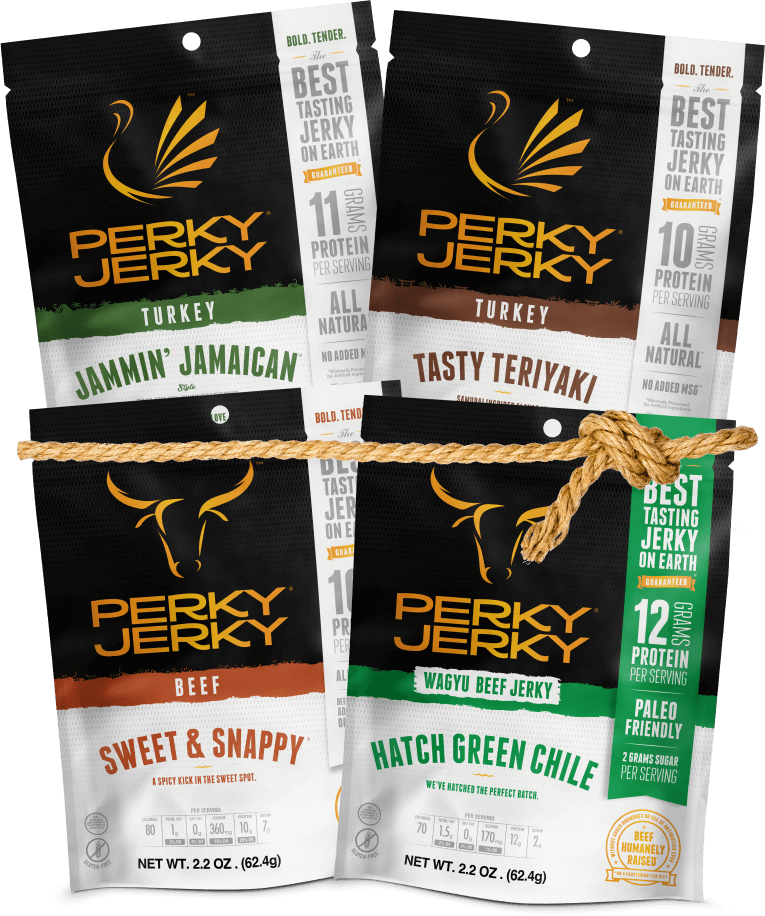
Turkey jerky can be low in fat too. Our Sweet & Snappy Turkey Jerky has 0.5 g of fat and 80 calories per 1-ounce serving, with 8 g of carbohydrates.
Because the water is gone, jerky is more calorie-dense by weight. Calories and carbs also shift from flavor to flavor, depending on the marinade and any added sweeteners.
Sodium and Added Ingredients
Plain turkey breast lets you control the salt and seasonings yourself.
Turkey jerky usually gets sodium from its marinade or seasoning, and some products include added sugar, soy, or other ingredients. For example, Jammin’ Jamaican lists 360 mg sodium and 7 g sugar per 1-ounce serving, and its gluten-free soy sauce means it contains soy.
Not every turkey jerky is low-sodium or sugar-free, so reading the label matters, especially if you're watching your sodium or sugar intake. Our guide to what to look for on a jerky label walks through it.
Is Turkey Jerky as Healthy as Turkey Breast?
Both bring real benefits to the table. They just shine in different moments.
Turkey jerky benefits:
-
A convenient protein source
-
No prep required
-
Easy to bring to work, on road trips, or while traveling
-
A satisfying swap for lower-protein snacks like chips or candy
Turkey breast benefits:
-
High in protein
-
Typically lower in sodium when cooked without added salt
-
More control over preparation and ingredients
-
A natural fit as the main protein in a balanced meal
The bottom line: fresh turkey breast gives you more control over ingredients, while turkey jerky is an excellent choice when convenience matters.
Shelf Life and Convenience
Drying removes most of the moisture that bacteria need to grow, which is what helps make commercially produced jerky shelf-stable.
USDA guidance suggests eating refrigerated cooked turkey within 3–4 days and getting it into the fridge promptly after cooking. Commercially packaged, shelf-stable jerky can last much longer unopened. Just check the package for storage instructions, especially once the bag is open.
That staying power makes jerky easy to keep on hand for:
-
Office desk drawers
-
Road trips and long flights
-
Hikes and ski days
-
Lunchboxes
-
Post-workout snacks
Our 2.2 oz, 5 oz, and 14 oz bags are resealable, and our 1 oz 12-packs are individually packaged, so you can toss a single serving in your bag and go.
When Should You Choose Turkey Jerky Over Turkey Breast?
For On-the-Go Snacking
Commutes, trailheads, back-to-back meetings: turkey jerky is ready when you are. There's nothing to cook, no cooler to pack, and no sticky wrappers like granola bars or candy. For more ideas, see why turkey jerky is the perfect snack for busy days.
For Fitness and Protein Goals
Both can help you hit your daily protein target. How much they contribute depends on serving size and the rest of your diet. Jerky makes an easy add-on after the gym, while turkey breast can anchor a post-workout meal.
During Thanksgiving and Holiday Travel
Turkey breast belongs on the Thanksgiving table. Turkey jerky belongs in the glove box for the long drive to Grandma's, your carry-on, and the busy prep days before the feast. Need more holiday inspiration? Try these 7 healthy ways to enjoy turkey jerky this Thanksgiving.
Looking for a Convenient Turkey Snack? Try Perky Jerky
Our turkey jerky is made from tender cuts of turkey, marinated overnight in all-natural ingredients for bold flavor and a signature tender bite.
Pick your flavor:
-
More Than Just Original Turkey: bright lemon, cracked pepper, and a hint of garlic
-
Sweet & Snappy Turkey: a little sweet, a little kick
-
Tasty Teriyaki Turkey: savory teriyaki with natural sweetness
-
Hot & Bothered Turkey: for snackers who like the heat
-
Jammin' Jamaican Turkey: island-inspired and bold
Grab a resealable bag for your desk, a 12-pack of singles for the road, or build your own bundle before the holiday rush.